

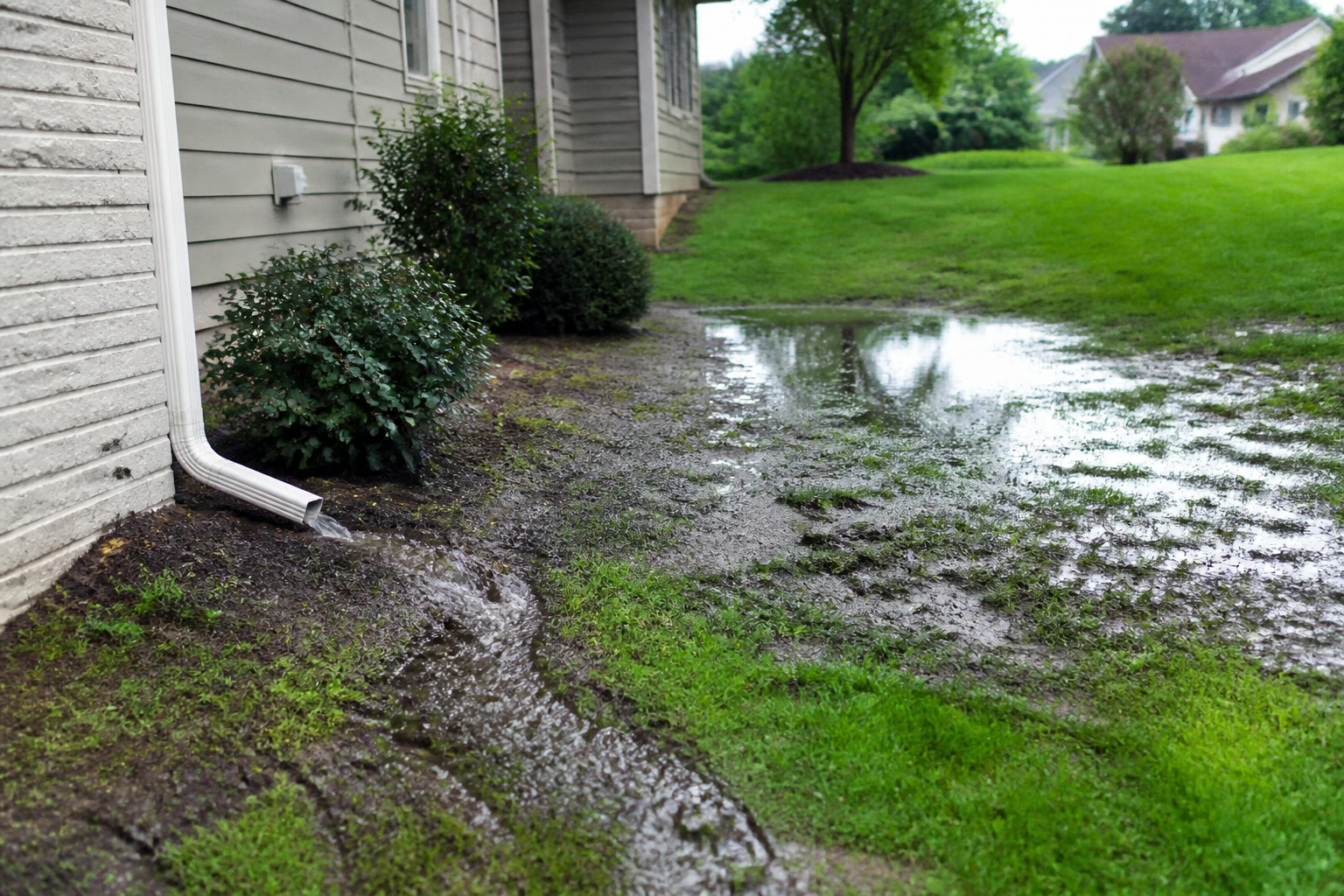
The strongest signs your yard needs regrading are usually recurring water and elevation patterns—not one puddle after an unusually heavy storm. If water repeatedly collects in the same low area, runoff consistently follows the same route, the lawn visibly slopes toward a sensitive area, or one section remains wet much longer than the rest, the surface grade may be worth assessing.
Other clues include low spots that keep returning, soil or mulch repeatedly washing away, and poor transitions between the lawn and patios, walkways or driveways.
None of these automatically means the entire yard needs to be regraded. Soil compaction, low-infiltration soil, downspouts, drainage systems, construction settlement and neighbouring runoff can create similar symptoms. Regrading is most relevant when the property’s surface elevations are contributing to where water moves or collects. Compacted soil, for example, can reduce infiltration and drainage even where the visible grade is not the main problem.
What Yard Grading Actually Controls
Yard grading refers to the shape and elevation of the ground surface.
At a practical homeowner level, the grade determines which areas are higher, which are lower and where surface runoff tends to travel.
Grading affects:
- The direction rainwater moves across the lawn
- Where low areas develop
- How lawn elevations meet patios and walkways
- How runoff moves between different parts of the property
- Whether water has a continuous surface path away from depressions
Municipal grading guidance in Toronto, for example, treats surface drainage and prevention of unintended ponding as core objectives when grading residential properties, although specific municipal requirements should not be generalized across the entire GTA.
Grading is only one part of drainage.
A yard with reasonable surface elevations can still stay wet because of compacted soil, poor infiltration, subsurface conditions or concentrated water from another source.
The key question is whether the surface shape of the property is directing water into the problem area or preventing it from leaving.
Sign 1: Water Repeatedly Pools in the Same Area
A puddle after an unusually intense rainfall does not automatically mean a grading problem exists.
Rain can sometimes arrive faster than soil can absorb it, creating temporary surface water even on otherwise functional properties.
Recurrence is more informative.
If water repeatedly collects in exactly the same part of the lawn during ordinary wet conditions, that area may be lower than its surroundings or lack an effective surface drainage route.
Possible contributing factors include:
- A localized depression
- Settlement
- Poor surface grading
- Compacted soil
- Low-infiltration soil
- Changes caused by previous construction
Watch what happens over several rain events.
Does the same depression fill each time? Does runoff visibly travel into it from another area? Does water disappear relatively quickly, or does it remain after nearby sections have dried?
These patterns provide far more useful information than a single photograph taken after an exceptional storm.
Sign 2: The Yard Visibly Slopes Toward the House
If the visible ground surface directs runoff toward the house or another area where you would prefer water not to collect, the grade deserves closer attention.
This is especially useful to observe during rainfall rather than relying only on how the yard looks when dry.
Look for water visibly moving:
- From the lawn toward the house
- From a higher backyard area toward steps or entrances
- Across a patio toward the building
- From side-yard areas toward low points beside structures
This does not mean visible slope automatically leads to building damage.
The concern is simpler: surface water follows elevation. If the existing grade repeatedly directs water toward a sensitive area instead of an intended drainage route, evaluating the elevation pattern is reasonable.
Avoid trying to diagnose the issue based on an assumed universal slope percentage. Residential properties and municipal requirements vary, and the surrounding drainage context matters.
Sign 3: Runoff Follows the Same Path After Rain
One of the best ways to understand a yard’s grade is to watch moving water.
Repeated runoff patterns can create visible routes such as:
- Water crossing the lawn in the same direction
- A shallow channel developing through soil
- Runoff repeatedly crossing a walkway
- Water moving along one side of a patio
- Flow concentrating beside a retaining edge
- A narrow pathway where mulch or soil repeatedly shifts
The path itself provides information about the property’s elevations.
Water tends to follow lower routes through the landscape. When the same route appears repeatedly, it suggests that the surrounding surface is consistently directing runoff there.
That does not automatically make the route a problem. Some drainage paths are intentional.
The concern arises when runoff produces recurring pooling, erosion, inconvenience or poor transitions with other landscape features.
Sign 4: Low Spots Keep Returning
Homeowners sometimes correct a visible depression by adding a small amount of soil to the surface.
That can work for a minor isolated irregularity.
But if the same low area repeatedly returns, the issue may extend beyond the top layer.
Possible reasons include:
- Settlement of disturbed soil
- Poor preparation beneath the lawn
- Repeated traffic or compaction
- Changes caused by previous construction
- Ongoing soil movement
- A broader elevation relationship directing water into the area
Repeatedly adding thin layers of soil without understanding why the depression returns may only treat the visible symptom.
If a section continues settling or collecting water, it is useful to evaluate how that area relates to the surrounding grade.
Sign 5: One Part of the Yard Stays Wet Much Longer
Persistent wetness can be an important clue—but it does not point exclusively to grading.
If one area remains soft or soggy long after the rest of the lawn has dried, possible explanations include:
- A lower surface elevation
- Soil compaction
- Heavy or low-infiltration soil
- Shade and reduced drying
- Concentrated runoff
- A nearby water source
- Drainage limitations below the surface
Compacted soil has less pore space and can have reduced rates of both infiltration and drainage, so water may pool or move across the surface instead of readily entering the soil.
This is why “wet lawn equals poor grading” is too simplistic.
Instead, compare the wet area’s elevation with surrounding sections and observe whether water is flowing into it.
If the area appears physically lower and repeatedly receives surface runoff, grading becomes a stronger possibility.
Sign 6: Soil or Mulch Keeps Washing Away
Erosion is another visible clue that can help reveal surface-water movement.
If rain repeatedly moves soil, mulch or other loose material from the same location, concentrated runoff may be passing through the area.
Look for:
- Exposed soil
- Small channels
- Mulch collecting downhill
- Soil accumulating at walkway edges
- Bare areas along a slope
- Material repeatedly washing out beside hardscape
Ontario soil guidance identifies runoff as an important driver of water erosion and notes that reduced infiltration associated with compaction or frozen soil can increase runoff potential.
The goal is not simply to keep replacing the material.
It is to understand where the runoff originates, why it becomes concentrated and where the property’s surface grade is directing it.
Sign 7: Lawn and Hardscape Elevations Do Not Work Together
Some grading problems become most obvious where soft landscaping meets hard surfaces.
Pay particular attention to transitions around:
- Interlock patios
- Concrete
- Walkways
- Driveways
- Steps
- Retaining edges
You may notice water consistently collecting where the lawn meets a patio, or soil sitting noticeably too low beside the paved edge.
Other properties have the opposite condition: soil has been added high against a hard surface without considering how water should travel between the two areas.
A patio, driveway and lawn should not be treated as unrelated surfaces.
Each establishes elevations that influence the next.
If a future backyard renovation includes both hardscape and lawn work, these transitions should be considered as part of the overall surface drainage plan.
Why Fall Can Make Grading Problems Easier to See
Fall can be a useful season for observing a property because wetter conditions may reveal patterns that were difficult to see during dry summer weather.
As temperatures become cooler, surfaces generally do not dry in exactly the same way they do during hotter periods. Seasonal rainfall can leave soil wetter, allowing homeowners to observe:
- Recurring low areas
- Runoff paths
- Soft sections
- Hardscape transitions
- Areas where erosion develops
The value of fall is diagnostic.
It gives homeowners an opportunity to photograph and understand existing conditions before snow eventually covers many of the visual clues.
That does not mean every grading project must be constructed before winter or that fall is universally the best construction period.
The appropriate timing depends on the specific property, scope and conditions.
What Happens When Winter Arrives?
Snow does not erase an existing drainage pattern. It temporarily stores water on top of the landscape.
When temperatures rise, that stored snow becomes meltwater.
The existing elevations then influence where surface meltwater travels.
Snow piles can also concentrate meltwater in particular locations. A pile beside a driveway or patio, for example, may release a significant amount of water into the same part of the yard as temperatures rise.
Spring conditions add another variable: soil can sometimes remain frozen or partly frozen while snow at the surface is melting. Frozen soil can reduce infiltration under some conditions, increasing the amount of water moving as surface runoff.
This is why spring snowmelt can make an existing low area appear dramatically wetter.
The snow did not necessarily create the grading defect.
It may simply have made the property’s existing runoff pattern easier to see.
Does Standing Water Always Mean the Yard Needs Regrading?
No.
Standing water has several possible causes, and the correct solution depends on which factors are actually contributing.
Other possibilities include:
- Compacted soil
- Low-infiltration soil
- Blocked or ineffective drainage
- Downspout discharge
- Subsurface conditions
- Neighbouring runoff
- Recent construction
- Exceptional rainfall
Several factors can also exist at the same time.
For example, a low spot may receive runoff because of the grade while compacted soil in that same location prevents water from infiltrating effectively.
Regrading is most appropriate when changing the surface elevations would address an important part of the problem.
A useful assessment therefore looks at both where water moves and why it remains there.
Does the Entire Yard Need to Be Regraded?
Not necessarily.
The phrase “yard regrading” can sound like every part of the lawn needs to be removed and rebuilt, but the appropriate scope depends on how the elevations relate across the property.
Possible situations can involve:
- A localized low-area correction
- A problematic lawn-to-patio transition
- Adjustment of one drainage path
- Correction around a recently disturbed area
- Broader grading across a larger section of the property
The correct scope should follow the actual elevation problem.
Changing more of the property than necessary can affect existing transitions and drainage relationships, while correcting too small an area may fail to address the larger pattern.
Why Grading Should Be Considered Before New Sod
New sod does not remove a low spot.
The finished lawn follows the prepared surface underneath it.
If the soil contains a depression before sod is installed, the new turf will generally follow that same depression.
Poor drainage can also make new-sod establishment more difficult if sections remain persistently saturated.
For that reason, major elevation concerns should be addressed before final soil preparation and sod installation.
The sequence is straightforward: resolve important grading issues, establish the final lawn surface, prepare the soil and then install the finished turf.
Why Grading Should Be Considered Before Interlock or Backyard Renovation
Major landscaping work creates new finished elevations.
A new patio establishes one elevation. Deck stairs meet another. Retaining walls create changes in level. Walkways connect different parts of the property.
Those elements affect where the surrounding lawn can finish and how runoff will move afterward.
Before committing to finish work, consider how the grade interacts with:
- Interlock patios
- Walkways
- Retaining walls
- Deck stairs
- Driveways
- Lawn areas
- Future planting
Grading decisions are easier to coordinate before finished surfaces are installed than after a completed patio or new lawn has already locked in the surrounding elevations.
What Homeowners Should Document Before an Assessment
You can gather useful information without trying to engineer the drainage solution yourself.
Before an assessment, document:
- [ ] Photos immediately after rainfall
- [ ] Photos of the same areas after they dry
- [ ] Where visible water appears to originate
- [ ] The direction runoff travels
- [ ] Where water eventually stops
- [ ] Recurring low areas
- [ ] Downspout locations
- [ ] Visible drains
- [ ] Lawn-to-hardscape edges
- [ ] Areas affected by recent construction
- [ ] Sections that remain wet longest
- [ ] Places where soil or mulch repeatedly washes away
A short video taken while runoff is actively moving can also be useful.
This documentation does not determine the solution by itself, but it makes recurring patterns easier to evaluate once the property is dry.
Frequently Asked Questions
How do I know if my yard needs regrading?
Look for recurring elevation-related patterns such as water collecting in the same low area, runoff consistently travelling toward an unwanted location, repeated settlement or poor transitions between the lawn and hardscape. One isolated puddle is not enough to confirm that regrading is needed.
Does standing water mean poor grading?
Not necessarily. Surface grade can cause pooling, but compacted soil, poor infiltration, downspouts, drainage systems, subsurface conditions and unusually heavy rainfall can produce similar symptoms. The cause should be identified before choosing a solution.
Can only part of a yard be regraded?
Yes. Some properties may require only targeted adjustment of a low area or transition, while others may need broader elevation changes. The appropriate scope depends on how the problem area relates to the surrounding grade.
Why does one area of my lawn stay wet?
Possible causes include a low elevation, compacted soil, poor infiltration, shade, concentrated runoff or subsurface drainage conditions. Observing whether surface water repeatedly flows into the area can help determine whether grading may be contributing.
Should grading be fixed before new sod?
Significant grading problems should generally be addressed before final soil preparation and sod installation. Sod follows the prepared surface beneath it and does not correct a recurring low area on its own.
Is fall a good time to assess yard drainage?
Fall can be useful for observing grading and drainage because rainfall and wetter soil may make recurring runoff and low areas easier to identify before snow covers the surface. That does not mean every grading project must be completed before winter.
The most useful signs your yard needs regrading are patterns that repeat: the same low spot fills with water, runoff follows the same route, soil repeatedly washes away or lawn and hardscape elevations consistently direct water where it should not collect.
For GTA homeowners noticing these conditions, Sod Pro Express can discuss grading and soil-preparation needs as part of broader landscaping work. Evaluating the surface elevations before installing new sod, interlock or other finish landscaping can help ensure those improvements are built around a better-understood property grade.
Related Services & Helpful Resources
- Primary Service: Learn more about our yard regrading and soil preparation.
- Related Service: Explore landscape retaining walls.
- Supporting Guide: Read our guide on interlock drainage and proper grading.
- Supporting Guide: Read our guide on fixing bumpy and uneven lawns.