

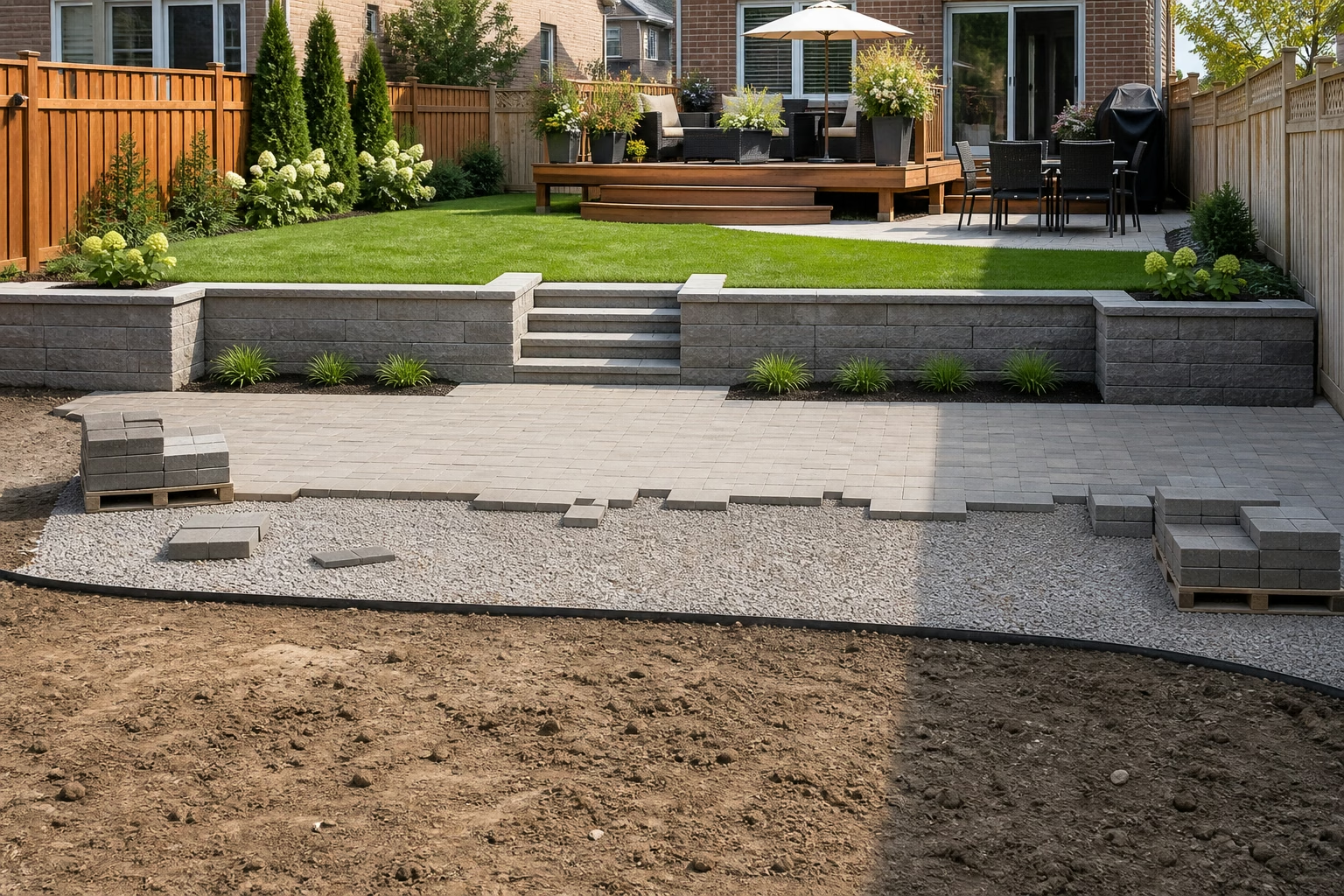
There is no single backyard renovation order that works perfectly for every property. The correct sequence depends on drainage, elevations, construction access, planned structures and the way different parts of the yard connect.
However, the general logic is consistent: disruptive work and major elevation decisions usually happen before delicate finish surfaces and new lawn. A typical sequence is:
site assessment and scope → grading and drainage → major excavation and elevation work → access-sensitive structures → interlock and hardscape → final grading and soil preparation → sod and finish landscaping
The purpose is not to follow a rigid checklist. It is to avoid damaging completed work, closing equipment access too early, changing finished elevations later, excavating through new surfaces or installing sod before heavy construction traffic is finished.
Why Backyard Renovation Order Matters
A backyard renovation may involve several types of work, but they all share the same space.
That creates dependencies.
A patio needs a planned finished elevation. The lawn beside it needs to meet that elevation cleanly. A retaining wall may determine where one grade ends and another begins. A deck can affect stair locations and nearby hardscape. A new fence can limit machinery and material access.
Construction itself also disturbs the property. Excavation produces soil and debris. Equipment needs travel routes. Aggregate, pavers, lumber and other materials need to be moved into the yard.
If sod is installed before excavation, equipment may later need to cross the new lawn. If a fence closes the only practical side-yard access before hardscape work begins, later excavation and material delivery can become more difficult.
The main sequencing principle is simple:
Functional, elevation-setting and disruptive work generally comes before finish and easily damaged work.
Typical Backyard Renovation Order at a Glance
The following is a useful sequence framework, not a mandatory schedule for every GTA property.
| Stage | Typical Work | Why It Happens Here |
|---|---|---|
| 1 | Scope and site assessment | Establish what work affects the rest of the project |
| 2 | Drainage and major grading | Set important elevations and understand water movement |
| 3 | Excavation and retaining work | Complete disruptive earthwork and major grade changes early |
| 4 | Major structures and access-sensitive work | Coordinate decks, fences and other work around equipment access |
| 5 | Interlock and major hardscape | Install after key elevations and disruptive work are established |
| 6 | Final grading and soil preparation | Repair construction disturbance and prepare lawn and planting areas |
| 7 | Sod, planting and finish landscaping | Protect finish work from heavy construction traffic |
The actual order can change when a property has narrow access, significant grade changes, unusual structural work or multiple construction phases.
Step 1: Confirm the Project Scope and Site Conditions
The first step is not a full backyard design exercise. It is simply identifying what work is expected so the construction sequence can be planned properly.
Before starting, establish whether the project includes:
- grading or drainage corrections
- retaining walls
- a deck
- fencing or gate changes
- an interlock patio or walkway
- new sod or lawn replacement
- structures that require excavation or access
- future work that could affect today’s construction
Access should also be identified early. A narrow side yard, existing fence, neighbouring constraint or limited gate opening can change which work needs to happen first.
The purpose of this stage is to understand which components affect elevations, which require heavy access and which should be protected until later.
A future project does not need to be fully designed at this point, but it should not be ignored if it will require excavation through an area that is about to be finished.
Step 2: Understand Grading and Drainage Before Finish Work
Grading and drainage are usually among the first major construction decisions because they influence where later surfaces need to finish.
Important site conditions include:
- existing slopes
- low areas
- runoff patterns
- house-to-yard transitions
- patio and walkway elevations
- lawn elevations
- retaining needs
- downspouts and existing drainage features
If a broad low area needs to be corrected, installing new sod over it will not change the underlying grade. If a retaining wall will create a new level in the yard, the future patio and lawn need to respond to that elevation. If the patio elevation changes, the surrounding lawn transition may need to change with it.
This is why installing sod, planting or finished hardscape before major grading corrections can create unnecessary rework.
The goal at this stage is not to design a complete drainage system from a generic formula. It is to establish the important site elevations and identify drainage conditions before permanent finish work locks those elevations in place.
Step 3: Complete Major Earthwork and Excavation Early
When a backyard requires significant excavation, soil removal or broad grade changes, that work generally belongs early in the construction sequence.
Major earthwork is disruptive.
It may involve:
- excavation
- removal of existing soil or landscape material
- moving or importing soil
- broad grade changes
- base preparation
- retaining-wall excavation
- repeated equipment movement
- hauling material through the yard
Doing this work after new lawn, planting or decorative finish areas are complete can mean disturbing them again.
Heavy access is another reason to complete earthwork early. Machinery, wheelbarrows, material deliveries and soil removal can damage new sod, compact prepared planting areas and disturb finished lawn edges.
Early earthwork establishes the broad shape of the site. More precise finish grading can happen later after construction traffic has ended.
Step 4: Retaining Walls and Elevation-Control Work
Retaining walls may need to be completed relatively early when they establish or support important grade changes.
A retaining wall can determine:
- where one finished elevation ends
- where a patio or lawn level begins
- how a terrace is formed
- how nearby steps or walkways connect
- which areas require later final grading
For that reason, a retaining wall that controls a major grade should usually be resolved before adjacent patio or lawn elevations are finalized.
Imagine completing the lawn first and later changing one side of the yard to a different retained elevation. The finished lawn transition would likely need to be adjusted.
Similarly, if an interlock patio will meet a retaining wall, both elements need compatible finished levels.
The point is not that every small landscape wall must always come first. The sequencing question is whether the wall controls the elevations that later work depends on.
Protect Construction Access Until Heavy Work Is Finished
Construction access is one of the most important reasons backyard renovation order changes from property to property.
A contractor may need access for:
- excavation equipment
- soil removal
- aggregate and base delivery
- paver delivery
- retaining-wall material
- deck lumber or components
- waste removal
- grading equipment
In some GTA backyards, the only practical route is a narrow side yard or gate.
If that route is closed too early by a finished fence, new lawn, planting bed or other permanent feature, later work may become more difficult or require crossing completed areas.
For example, installing a finished fence before an interlock patio is not automatically wrong. But if that fence closes the only route wide enough for excavation and base-material movement, its timing may need to change.
The same logic applies to sod. A new lawn should not become the primary material-delivery route for hardscape work scheduled afterward.
Before completing any feature that affects access, ask:
What equipment and materials still need to enter or leave the backyard?
That question often determines the correct sequence more clearly than a generic renovation checklist.
Where Do Fences Fit in the Order?
There is no universal rule that a fence must always be installed before or after a patio.
Fence timing depends on:
- equipment access
- gate locations
- property boundaries
- grade changes
- retaining walls
- patio layout
- neighbouring conditions
- whether fence posts affect nearby construction areas
If an existing fence can remain in place without restricting construction, the new fence may be installed later.
If fence posts need to be coordinated with a retaining wall, patio edge or other feature, some fence work may need to be considered earlier.
If a new fence would close the only practical machinery access, installation may need to wait until heavy work is complete.
The useful rule is not “fence first” or “fence last.” It is:
Coordinate fence timing with access and adjacent construction.
Where Do Decks Fit in the Order?
Deck timing is also property-specific.
A deck connected to the house can affect:
- stair locations
- nearby patio elevations
- walkways
- ground below and around the structure
- equipment access
- surrounding grading
If a patio will meet the bottom of deck stairs, those elevations should be coordinated even if the deck and patio are constructed at different times.
Deck construction can also disturb nearby soil, which is one reason major deck work is usually completed before final sod installation in the affected areas.
However, a deck does not automatically have to be completed before every piece of hardscape. Some projects are built in coordinated stages, and access may make it practical to complete certain excavation or base work first.
The important sequencing question is which component establishes the elevation or access condition the other one needs.
Step 5: Install Interlock After Major Elevation Decisions
Interlock patios and walkways generally make more sense after major grading decisions, excavation affecting their area and retaining work that establishes nearby levels.
An interlock surface creates a fixed finished elevation.
The lawn, planting beds, stairs and other surfaces around it then need to meet that elevation appropriately.
If the lawn is fully prepared first and the patio elevation later changes, the lawn transition may need to be rebuilt. If retaining work is still planned beside the patio, later excavation could disturb the finished hardscape.
For projects containing both interlock and new sod, the common sequencing logic is therefore:
establish the hardscape first → finish the surrounding lawn grade afterward
Once the interlock is complete, unnecessary heavy construction traffic across the finished surface should also be minimized where practical.
The goal is to avoid treating the patio as a finish surface while major disruptive work is still scheduled around it.
Step 6: Final Grading and Soil Preparation
One of the most useful distinctions in a backyard renovation is the difference between major grading and final grading.
Major or rough grading
This usually happens earlier.
Its purpose is to establish the broad shape of the site, address significant elevation changes and prepare the property for retaining work, structures and hardscape.
Final grading
This happens later, after disruptive construction is substantially complete.
By that point, the yard may have experienced:
- excavation
- equipment traffic
- material storage
- soil movement
- disturbance around patio edges
- disturbance near walls, fences or deck construction
Final grading prepares the areas that will actually receive sod, planting or other finish landscaping.
Work may include correcting smaller irregularities, restoring disturbed soil, refining transitions to completed hardscape and preparing the surface to the intended final lawn elevation.
This is why grading can legitimately appear near both the beginning and the end of the renovation sequence: the two stages serve different purposes.
Step 7: Install Sod and Finish Landscaping Near the End
New sod is usually installed near the end of a backyard renovation rather than before the major construction stages.
The reason is straightforward: new sod is easily damaged by work that should have happened earlier.
Construction can subject a new lawn to:
- equipment traffic
- material storage
- excavation
- repeated foot traffic
- soil piles
- disturbance along patio and walkway edges
Waiting until major hardscape, excavation and heavy access are complete allows the lawn to be prepared against established finished edges.
New sod can then meet:
- patios
- walkways
- decks
- retaining walls
- fence lines
- garden beds
at the final planned elevations.
Sod does not have to be literally the final task on every project. Planting, cleanup or minor finish work may continue afterward.
The broader rule is that delicate finish landscaping should generally be protected from the work most likely to disturb it.
Where Do Pergolas and Other Structures Fit?
Pergolas and other outdoor structures do not have one fixed position in the sequence.
Their timing should be considered in terms of:
- footing or foundation locations
- patio layout
- deck design
- equipment access
- ground disturbance
- construction timing
If a future structure would require excavation through a finished patio or new lawn, its location should be considered before those surfaces are completed.
This does not require turning the renovation-order discussion into a complete pergola design plan. The useful question is simply:
Will installing this feature later require reopening work we are about to finish now?
Example Backyard Renovation Sequences
These examples illustrate sequencing logic rather than mandatory construction specifications.
Example 1: Grading + interlock + sod
A possible sequence is:
grading and drainage assessment → major excavation and base work → interlock installation → final soil preparation → sod
The hardscape is established before the final lawn so the sod can meet the completed patio or walkway elevation.
Example 2: Retaining wall + patio + lawn
A possible sequence is:
elevation planning → retaining work → patio construction → final grading → lawn
The retaining wall comes early because it establishes the grade that later patio and lawn areas need to meet.
Example 3: Fence + patio + sod with narrow access
The fence may not be the first item if installing it would close the only practical route for machinery and material delivery.
A possible sequence could be:
access planning → excavation and patio work → fence installation when heavy access is no longer required → final grading → sod
On another property with adequate access elsewhere, the fence could be installed earlier.
The point is to sequence the work around dependency and access, not around a universal list.
What If the Backyard Renovation Is Completed in Phases?
Phased renovations can work well when each stage preserves what the next stage will need.
The sequence questions are:
- Will future excavation cross an area being finished now?
- Does equipment access need to remain open?
- Are future patio or deck elevations already known?
- Will a later structure require disturbing new sod?
- Does today’s hardscape leave a workable transition for a later phase?
For example, installing sod over an area that is expected to become a patio next season may create avoidable rework.
Likewise, completing a fence now can be reasonable if future construction still has practical access.
The key principle is to avoid allowing phase one to physically interfere with phase two.
Common Backyard Renovation Order Mistakes
Sequencing mistakes often happen when one component is treated as finished before the work around it is understood.
Installing new sod before excavation is finished
Later machinery, soil removal and material movement can damage a new lawn.
Closing machinery access with a fence too early
A fence may reduce gate width or eliminate the easiest route needed for later excavation and hardscape work.
Choosing patio elevation before considering grading and drainage
A patio establishes a permanent finished level. If surrounding elevations are not considered first, adjacent areas may need to be reworked.
Finishing landscaping before retaining work
If a retaining wall changes the grade later, completed lawn or planting areas may need to be disturbed.
Completing decorative work before disruptive construction
Finish planting, new lawn and detailed landscape areas are vulnerable to excavation, storage and equipment traffic.
Failing to coordinate patio, deck and lawn elevations
Each feature can be built correctly on its own while still creating awkward steps, edges or transitions if their elevations were never coordinated.
Treating every project component independently
The most common sequencing issue is not one specific trade happening too early. It is failing to identify which component controls the next one.
What Should Be Done First in Your Backyard?
Before choosing which contractor or feature should physically start first, ask these questions:
- Are there drainage or elevation problems that affect the project?
- Is major excavation or soil removal required?
- Are retaining walls changing the grade?
- What access must remain open for equipment and materials?
- Which structures establish elevations that other surfaces must meet?
- Which finished areas should be protected until heavy construction is over?
The answers usually reveal the correct sequence.
A project with major drainage and grading work may begin very differently from one where the site elevations are already suitable.
A yard with narrow access may delay fence installation. A patio beside a retaining wall may need the wall completed first. A lawn beside new hardscape is usually easier to finish after the hardscape establishes the edge.
The general rule remains:
functional and disruptive work first; delicate finish work later.
Frequently Asked Questions
What should be done first in a backyard renovation?
Start by confirming the project scope, existing elevations, drainage conditions and construction access. Major grading or excavation that affects later work is generally addressed before permanent hardscape, final soil preparation and sod.
Should grading be done before interlock?
Major grading decisions should usually be understood before interlock is installed because the patio or walkway needs a planned finished elevation. Final grading around the completed hardscape may happen later before sod or planting.
Should a fence be installed before or after a patio?
Either can be correct. Fence timing depends heavily on equipment access, gate locations, grade changes and how the fence interacts with the patio. If the fence would close the only practical construction access, it may need to wait.
Should a deck be built before interlock?
Not always. Deck and interlock timing depends on their shared elevations, stairs, construction access and which work affects the other. They should be coordinated so one project does not force unnecessary changes to the other.
When should sod be installed during a backyard renovation?
Sod is usually installed near the end, after major excavation, heavy construction traffic, hardscape work and final lawn grading are substantially complete. Minor planting, cleanup or finish work may still follow.
Should retaining walls be built before a patio?
When the retaining wall establishes or supports the grade beside the patio, it will usually need to be resolved before the patio’s final elevation is completed. The exact sequence depends on the property and wall location.
Can a backyard renovation be completed in phases?
Yes. The key is to make sure early phases preserve access, elevations and space needed for future work. Avoid finishing areas that later phases are expected to excavate or cross.
For GTA homeowners planning grading, drainage work, retaining walls, decks, fences, interlock and sod, the construction order should be considered before individual components are started.
Sod Pro Express can discuss multiple outdoor renovation components within an overall project sequence, helping homeowners coordinate disruptive work, access-sensitive construction, hardscape, final grading and finish landscaping in an order that fits the property.
Related Services & Helpful Resources
- Primary Service: Learn more about our complete backyard renovations.
- Related Service: Explore general landscaping services.
- Supporting Guide: Read our guide on grading and site preparation.
- Supporting Guide: Read our guide on preparing the lawn before new sod.