
Interlocking Driveways, Patios & Walkways
An interlocking surface has to fit the way a property is used. Driveways carry vehicular weight, while patios and walkways focus on drainage, smooth foot transitions, and outdoor living space.
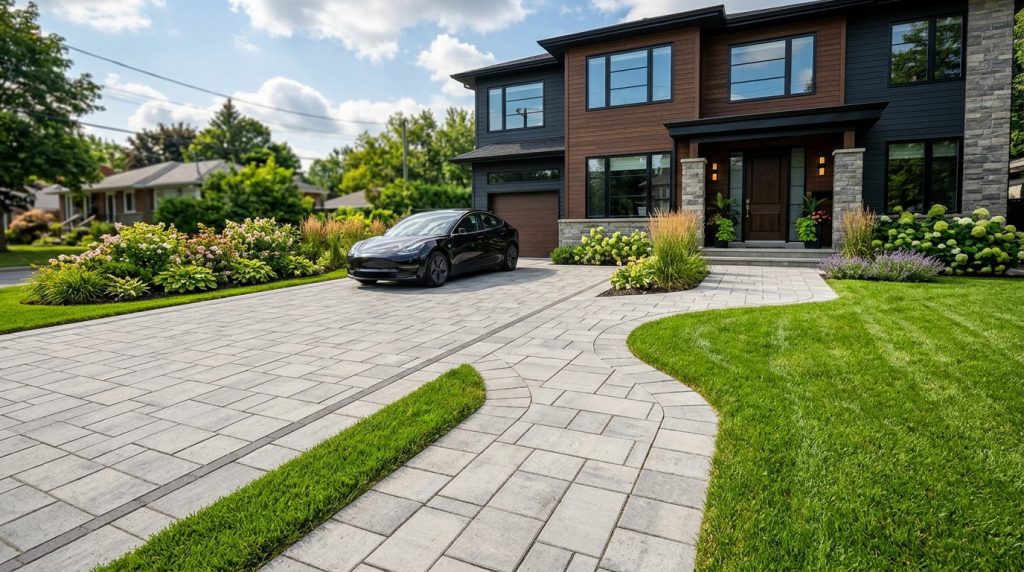
Interlocking Pavers vs. Poured Concrete
Why homeowners in Oakville, Mississauga, and Burlington choose interlocking stone for long-term durability against freeze-thaw cycles.
| Feature / Aspect | Interlocking Stone Pavers | Poured Concrete |
|---|---|---|
| Freeze-Thaw Resistance | Jointed surface; suitability depends on design, base, and site conditions | Concrete performance depends on mix, base, joints, and site conditions |
| Repairability | Individual units may be lifted and reset when access and condition allow | Repairs depend on the extent and location of the issue |
| Curb Appeal & Value | Many colour, border, and pattern options can be reviewed | Finish options depend on the selected concrete system |
| Sub-base Prep Depth | Base depth is confirmed from use, soil, drainage, and site conditions | Base depth depends on the proposed concrete use and site conditions |
Precision Interlock Driveways & Walkways
Compact Granular A base stone, polymeric sand jointing, and crisp border edging.
Interlock Patio & Jointing Planning
Review paver layout, jointing options, and lawn-border transitions for the proposed outdoor area.
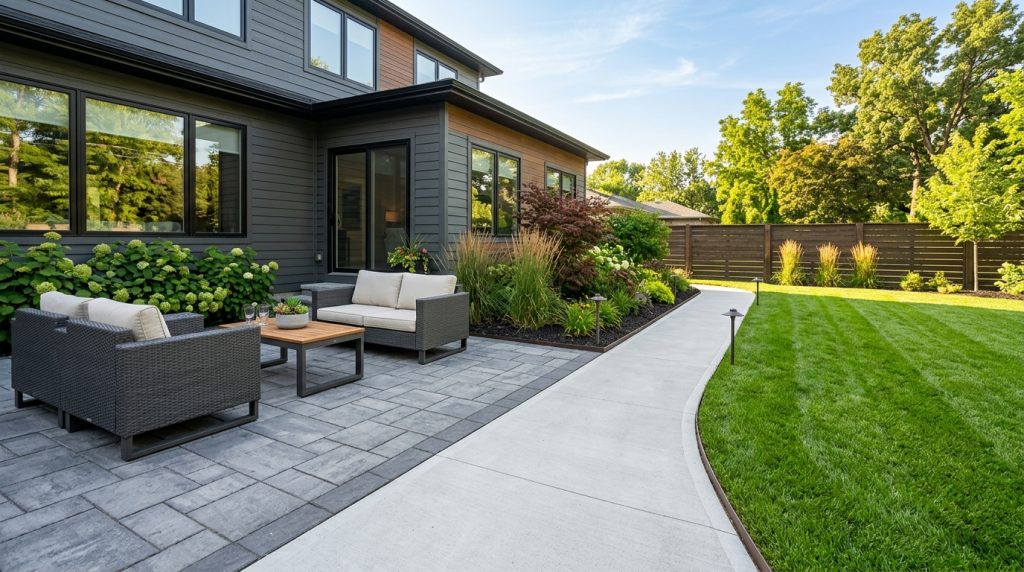
Interlock Base & Patio Planning
Confirm excavation, base materials, drainage, and intended use during the estimate before selecting the build-up.
Frequently Asked Questions
Should grading be considered before laying interlock stone?
Yes. Proper excavation and slope grading ensure rainwater drains smoothly away from the home foundation before compacting the aggregate stone base.
Can a patio and new sod be planned in the same estimate?
Absolutely. Coordinating interlock installation and sod laying together ensures stone borders are flush with the newly laid turf.